The Mineral Dialect of Colliding Worlds
Omega Science News Desk · Sunday, October 4, 2026 · Hosted by Don Sol
OPENING SIGNAL
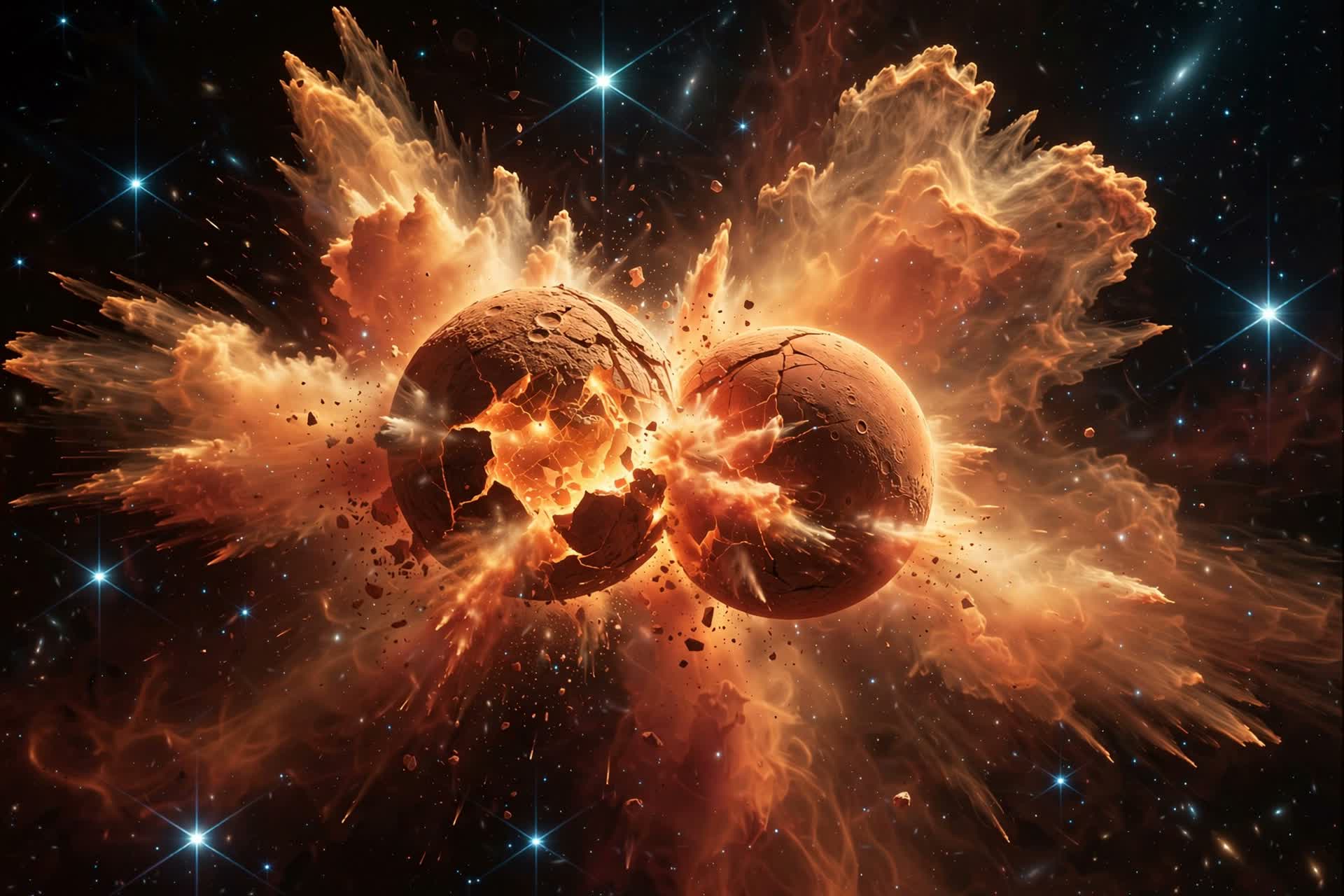
The clearest discovery signal this window is not a new planet. It is a census of the wreckage left when rocky worlds collide. On 1 October, ESA and the Space Telescope Science Institute reported that a team led by Kate Su of the Space Science Institute used the James Webb Space Telescope, with archival Spitzer data, to assemble 21 extreme debris discs. The paper is in The Astrophysical Journal. These systems hold unusually large amounts of warm dust in the zone where rocky planets orbit. Mid-infrared spectra show smaller grains than ordinary debris discs, high warm-dust concentration, and irregular brightness. About one third of the sample is silica-rich. The team reads silica-rich discs as vaporizing, high-energy impacts between roughly Mars-sized bodies, and only around stars younger than about 300 million years. The other two thirds are silica-poor, consistent with smaller, often grazing collisions that can persist and flicker. Observable extreme debris discs appear rare: roughly 1 percent of young stars in the data so far. That rarity, plus the age split, is the useful result. Moon-forming violence may be a short, uncommon phase, not the default setting of every planetary system.
1. THE BIG DISCOVERIES
Webb maps the mineral signature of planet-shattering collisions. WHAT HAPPENED: Su and colleagues compiled 12 newly observed extreme debris discs plus follow-up and archival targets, 21 systems in total. Spectra sort them into silica-rich and silica-poor. WHY IT MATTERS: Planetary embryos are too small to image directly. Their collision debris is now a measurable proxy for impact energy and composition. WHAT IT COULD BECOME: A clock for the rocky-planet assembly phase, and a test of whether our own Late Heavy Bombardment left a silica-poor infrared flicker. WHAT IT MEANS FOR YOU: The Moon-forming impact stops being a unique story and becomes a class of events with a measurable rate.
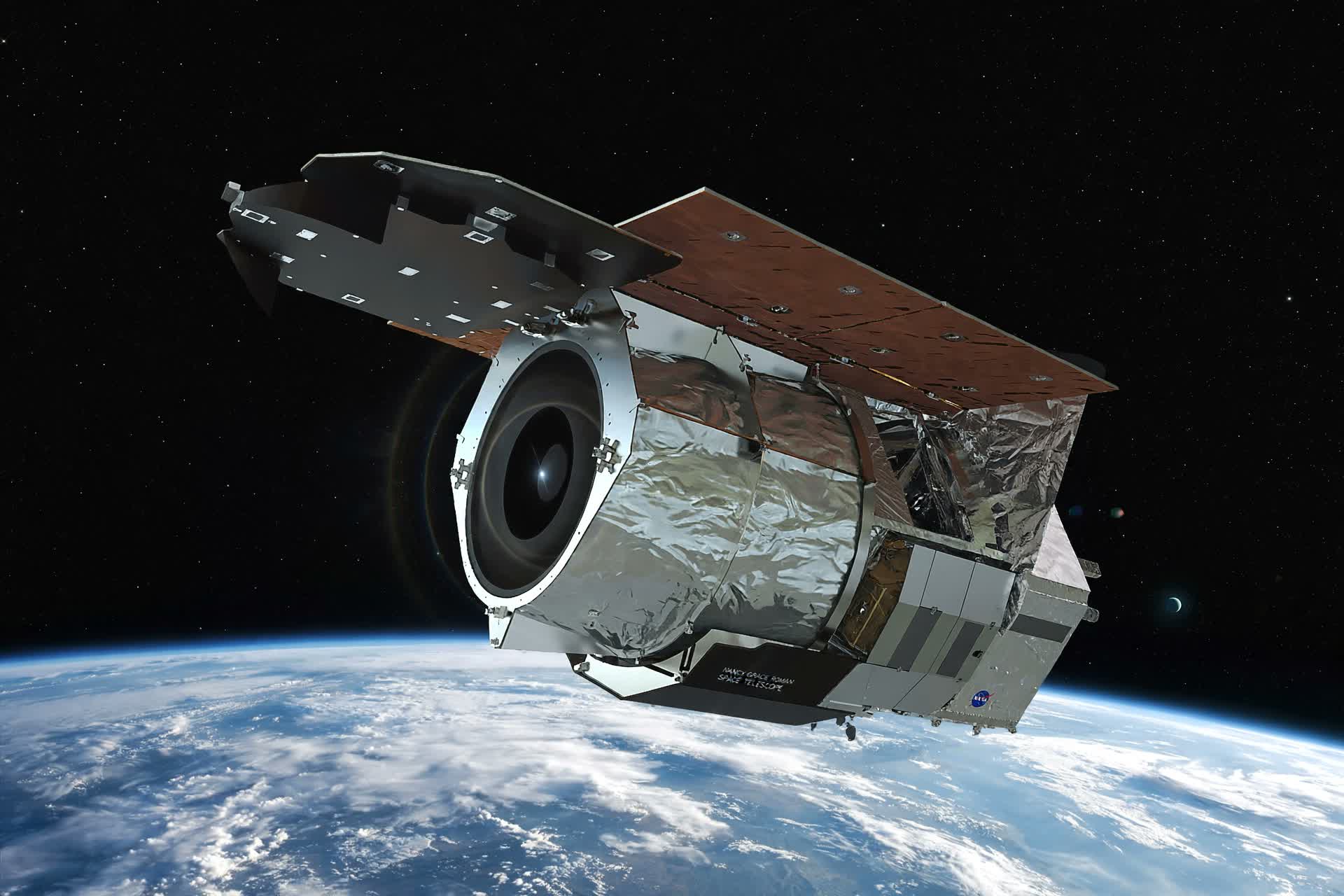
Roman's coronagraph took its first focused image in space. It is not a planet picture. WHAT HAPPENED: NASA JPL reported on 30 September that the Coronagraph Instrument on the Nancy Grace Roman Space Telescope opened to cosmic light on 22 September and produced a focused test image after focus adjustment. The instrument powered on 1 September. WHY IT MATTERS: This is the technology path for blocking starlight so faint planets and disks can be seen. WHAT IT COULD BECOME: A methodical commissioning sequence toward a dark hole on the sky. NASA expects Roman's first public images in early 2027. WHAT IT MEANS FOR YOU: Direct images of nearby worlds depend on this hardware working, not on another press render.
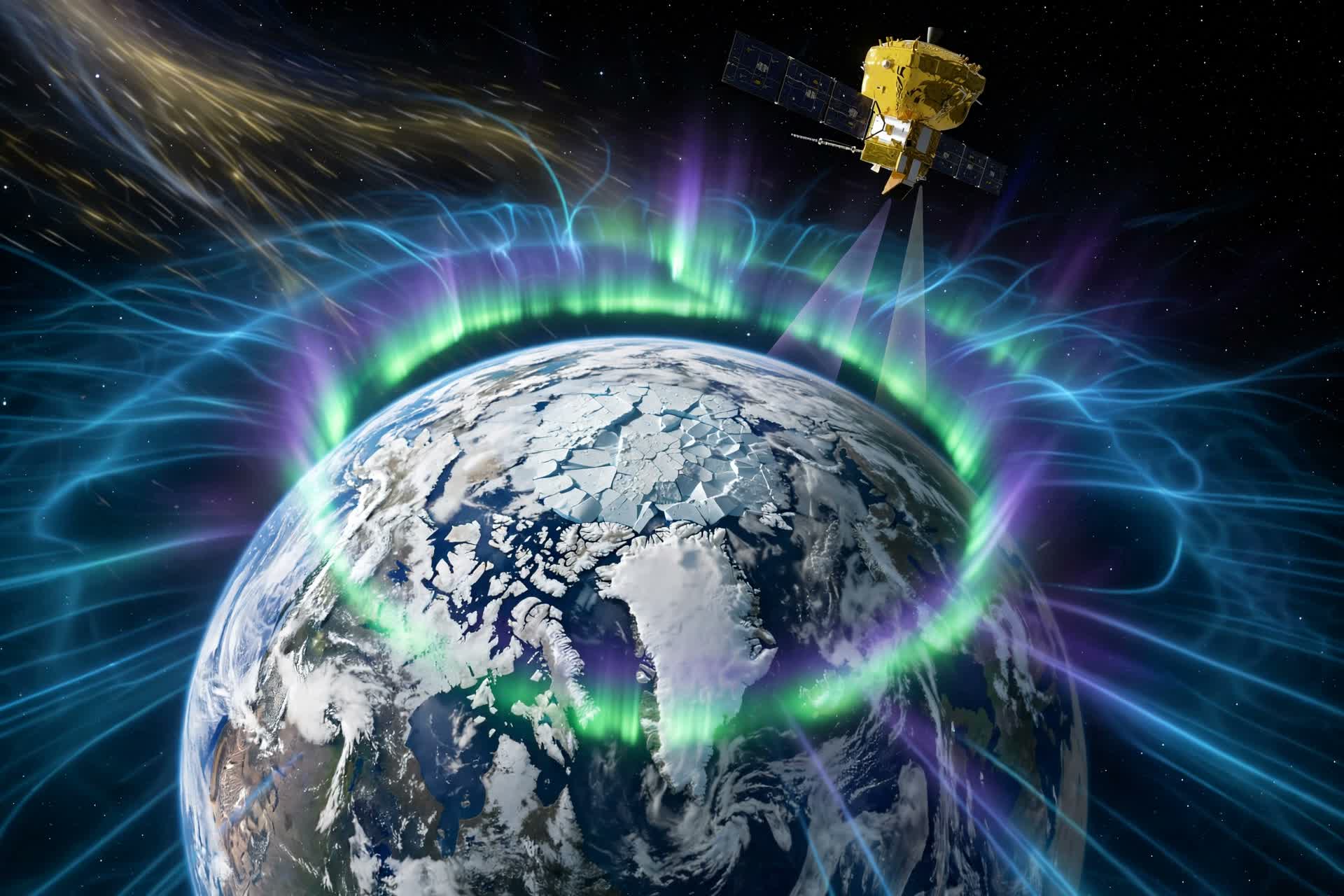
SMILE has started science. The X-ray smile of Earth's magnetic shield is still ahead. WHAT HAPPENED: ESA said on 30 September that the European-Chinese SMILE mission was declared ready for science on 23 September. The ultraviolet imager released the first full-ring northern-aurora footage since 2008, recorded 24 July, and can now record the ring for about 45 hours at a time. The soft X-ray imager is on and has calibration images of a distant supernova remnant. A clean X-ray image of the magnetopause or northern cusp is not in hand. ESA expects stray earthshine to fall enough by mid-October. WHY IT MATTERS: Auroras and power-grid risk are the ground footprint of solar wind hitting the magnetosphere. WHAT IT COULD BECOME: An operational view of the boundary the mission was named for. The UK Met Office Space Weather Operations Centre is already working with the team. WHAT IT MEANS FOR YOU: Better space-weather timing is an infrastructure problem, not only a sky show.
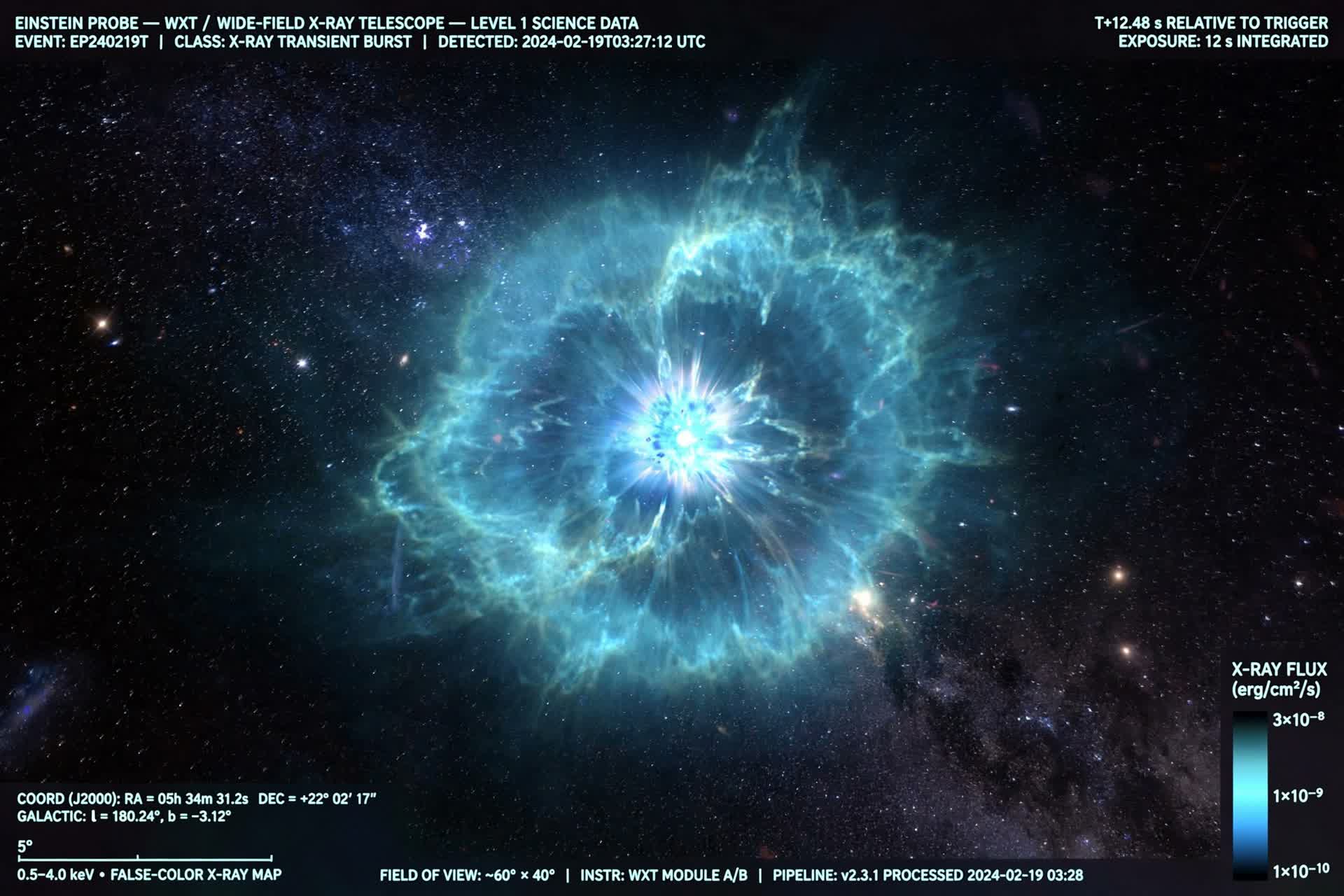
Einstein Probe caught a new X-ray transient on 3 October. WHAT HAPPENED: GCN Circular 45798 from the Einstein Probe team at NAOC reports EP261003a, triggered by the Wide-field X-ray Telescope at 00:14:43 UTC on 3 October. Position: right ascension 307.524 degrees, declination minus 12.936 degrees, about 3 arcminutes uncertainty. A follow-up telescope found an uncatalogued source inside that circle, uncertainty about 20 arcseconds. Telemetry was still incoming. WHY IT MATTERS: Wide-field X-ray monitors are how short-lived mergers, flares, and magnetar-like events get caught before they fade. WHAT IT COULD BECOME: A classified counterpart once optical, radio, or gamma data arrive. Source class is unknown. WHAT IT MEANS FOR YOU: Most violent cosmic events are found by machines that never sleep, then handed to telescopes that can point.
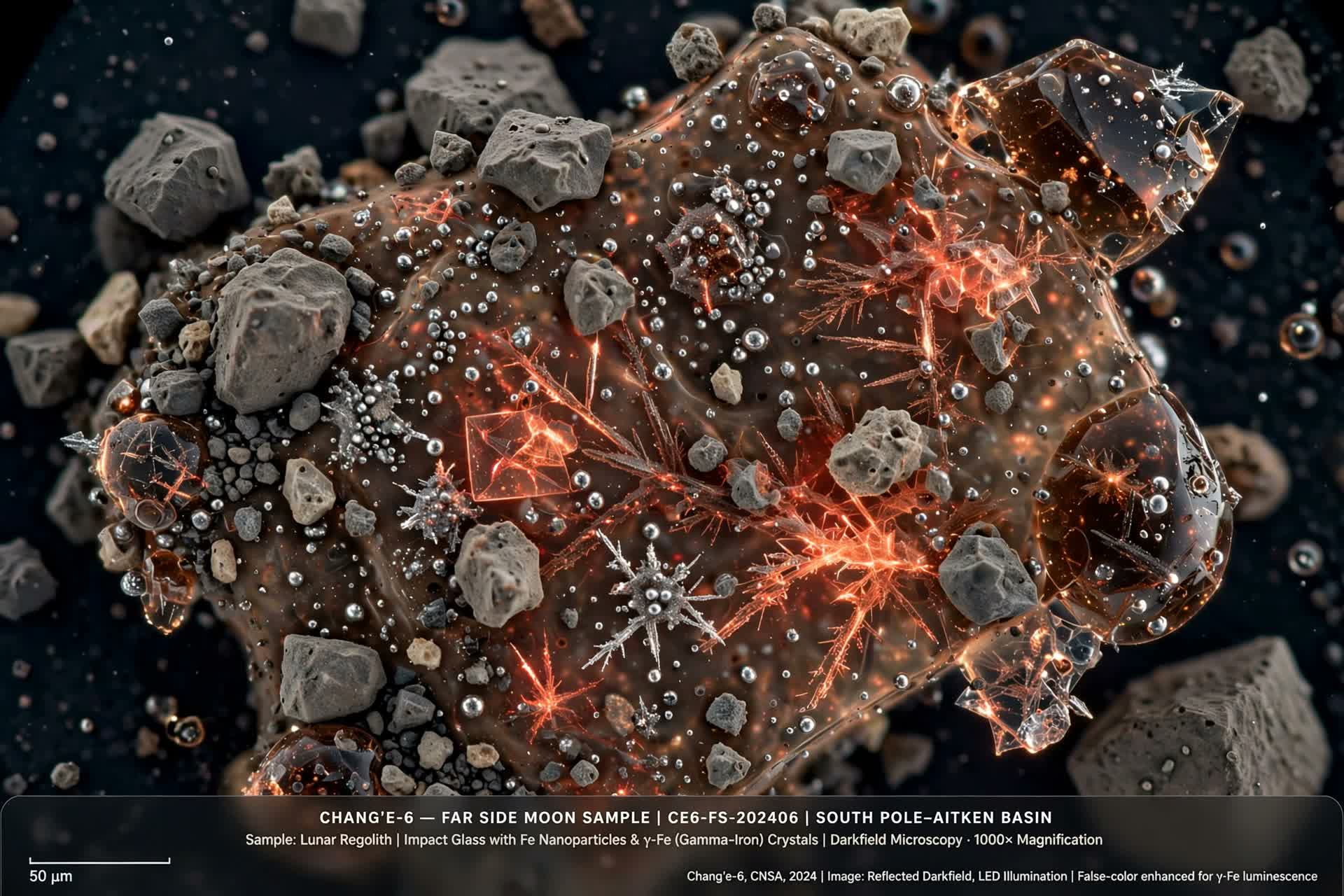
Chang'e-6 soil holds a lunar iron phase not previously seen in natural Moon samples. WHAT HAPPENED: A Chinese Academy of Sciences team led by Haifeng Du reported in PNAS on 16 September, widely circulated again on 3 October, that face-centered cubic gamma-iron dominates metallic iron particles inside two impact-glass grains from Chang'e-6 far-side soil. In 50 examined particles, gamma-iron was 64 percent of one sample and 76 percent of the other. A basalt grain was ordinary alpha-iron. Larger gamma-iron particles held a stable single-vortex magnetic state. WHY IT MATTERS: Gamma-iron is normally a high-temperature phase. Impact glass appears to have quenched it. It may be an extra recorder of ancient lunar magnetism. WHAT IT COULD BECOME: A new mineral clock for the Moon's disputed dynamo. WHAT IT MEANS FOR YOU: Returned dirt is still doing work that orbiters cannot. The magnetic-fossil claim is a hypothesis until more grains are measured.
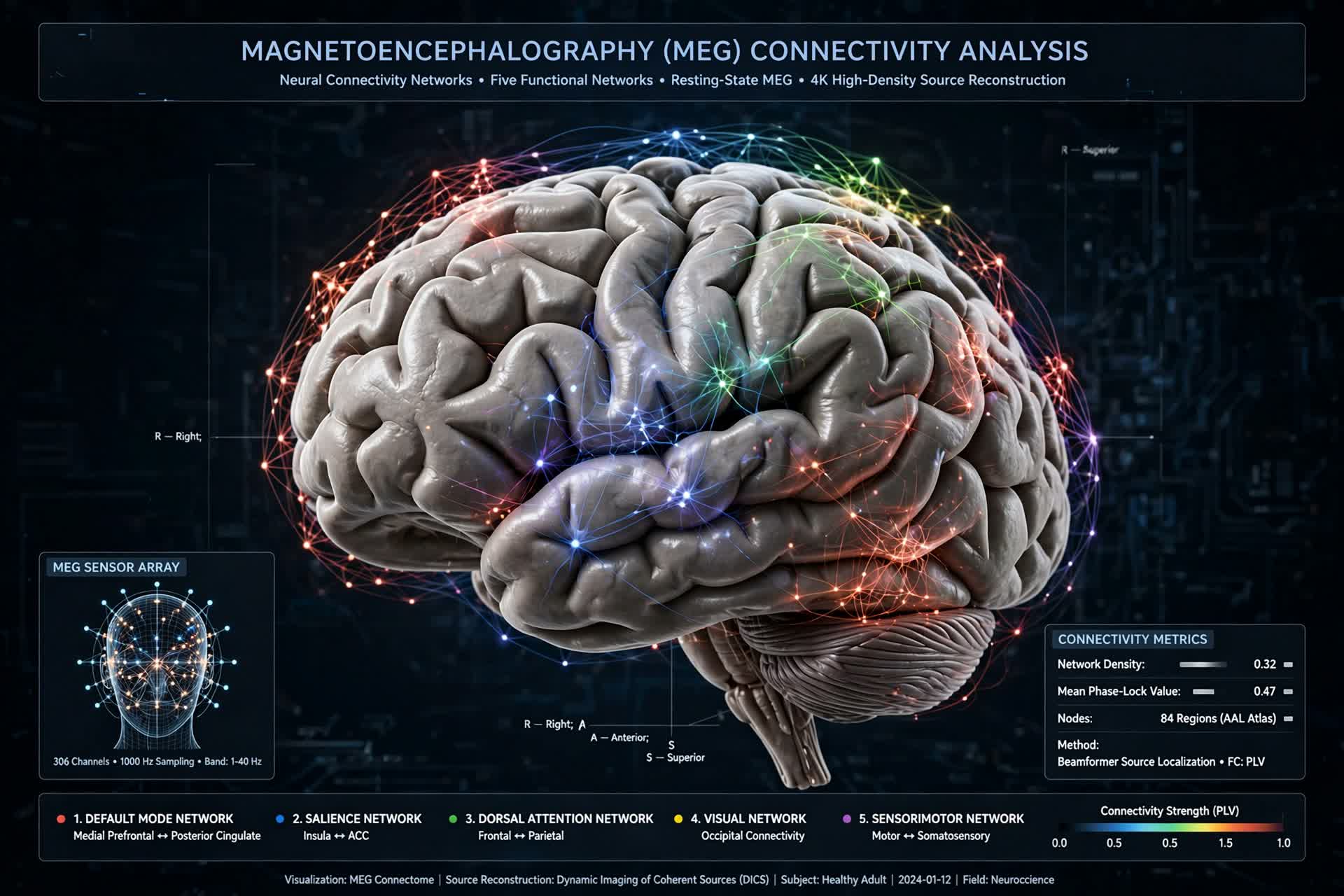
One depression diagnosis can hide opposite brain-connectivity patterns. WHAT HAPPENED: University of Helsinki researchers, release 23 September and reported 4 October, used magnetoencephalography on 263 people with major depressive disorder and 75 controls. They found five functional-connectivity groups, from broadly strong coupling with severe symptoms to weak coupling with milder symptoms, a trauma-linked low-connectivity group, a mixed group, and a strongest-connectivity group marked by substance use. WHY IT MATTERS: Conflicting depression imaging studies may have been averaging unlike brains. WHAT IT COULD BECOME: A stratification tool, not a treatment. Personalized psychiatry follows only if the groups replicate and predict outcome. WHAT IT MEANS FOR YOU: The same label does not mean the same circuit.
2. SPACE / COSMOS
The week's space stack is commissioning and collision forensics, not a new Earth twin. Webb's extreme-debris sample is the science result. Roman's coronagraph first light is an instrument checkout: focused image, fine-guidance hold, no exoplanet detection claimed. SMILE's ultraviolet camera closed an 18-year gap in full auroral-ring imaging. Its X-ray camera works on calibration targets. The magnetopause image is scheduled by geometry, not yet delivered. ESA's Juice spacecraft used Earth on 28 September as a gravity assist toward Jupiter. Einstein Probe's EP261003a is a fresh transient with a tightened X-ray position and no public classification.
3. PHYSICS / QUANTUM
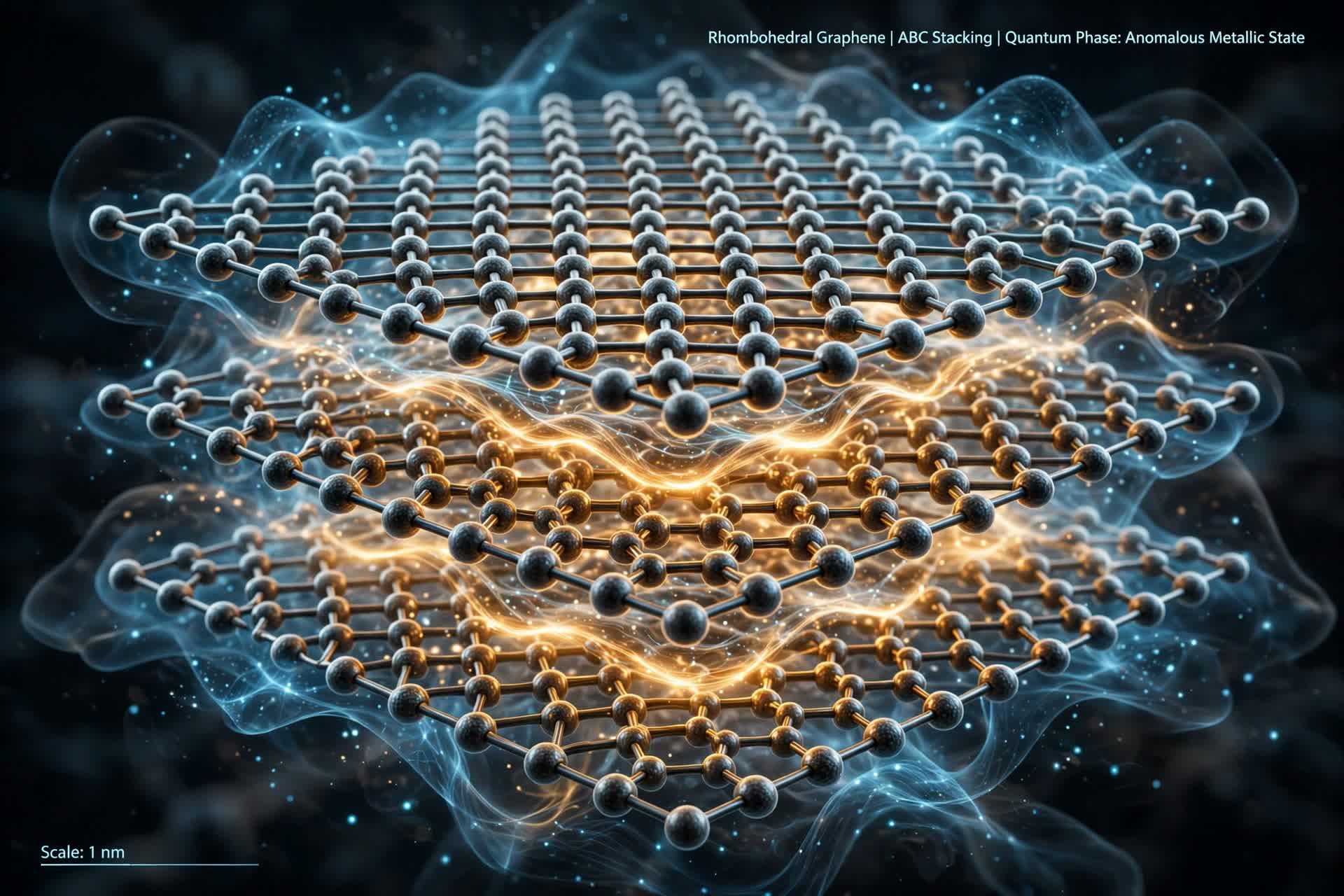
The physics paper inside this window is materials, not a new particle. Nature, 1 October 2026, carries work by Anna Okounkova, Abigail Sohm, and colleagues on anomalous metal and superconducting phases in rhombohedral graphene. The claim, as reported from the journal issue, is that ultra-clean, tunable rhombohedral graphene shows an anomalous metal alongside superconductivity, and that reproducibility argues against a simple dirt explanation. If the phase is intrinsic, stacked graphene becomes a controllable bench for the strange metal problem that also shows up in high-temperature superconductors. This desk has not independently read the full methods. No promotion above a journal-indexed result. No quantum-gravity or room-temperature claim is supported.
4. AI + SCIENCE
Limited data for a primary AI-as-instrument result in the last 24 hours. A secondary roundup claimed an AI model pushed a quantum-field-theory amplitude to nine-loop order, past prior human calculations. No paper, model card, or independent replication was in the sources checked for this brief, so that claim stays unpromoted. What is real in the adjacent record is narrower: AI is being used as a classifier on biological structure, including reports this week of models reading age-linked change in three-dimensional DNA architecture. Those are pattern-detection claims until a methods paper and a held-out test set are cited. The useful standard is unchanged. An instrument result needs a dataset, a baseline, an error bar, and a failure mode. Product demos do not clear that bar.
5. ENGINEERING / MATERIALS / ENERGY
The engineering objects this week are flight hardware, not lab curiosities. Roman's coronagraph is a starlight-suppression demo now producing focused images under fine guidance. SMILE's soft X-ray imager is the first of its kind intended to turn the magnetopause into a picture. Juice's Earth flyby is a propellant-saving trajectory rewrite already executed. On the Moon, impact-quenched gamma-iron is a materials finding: a high-temperature iron phase trapped in glass, with vortex magnetization in larger nanoparticles. That is a possible paleomagnetic medium, not a power source or a structural alloy. No battery, grid, or fusion milestone in the last day cleared the primary-source filter.
6. EARTH / LIFE / HUMAN ORIGINS
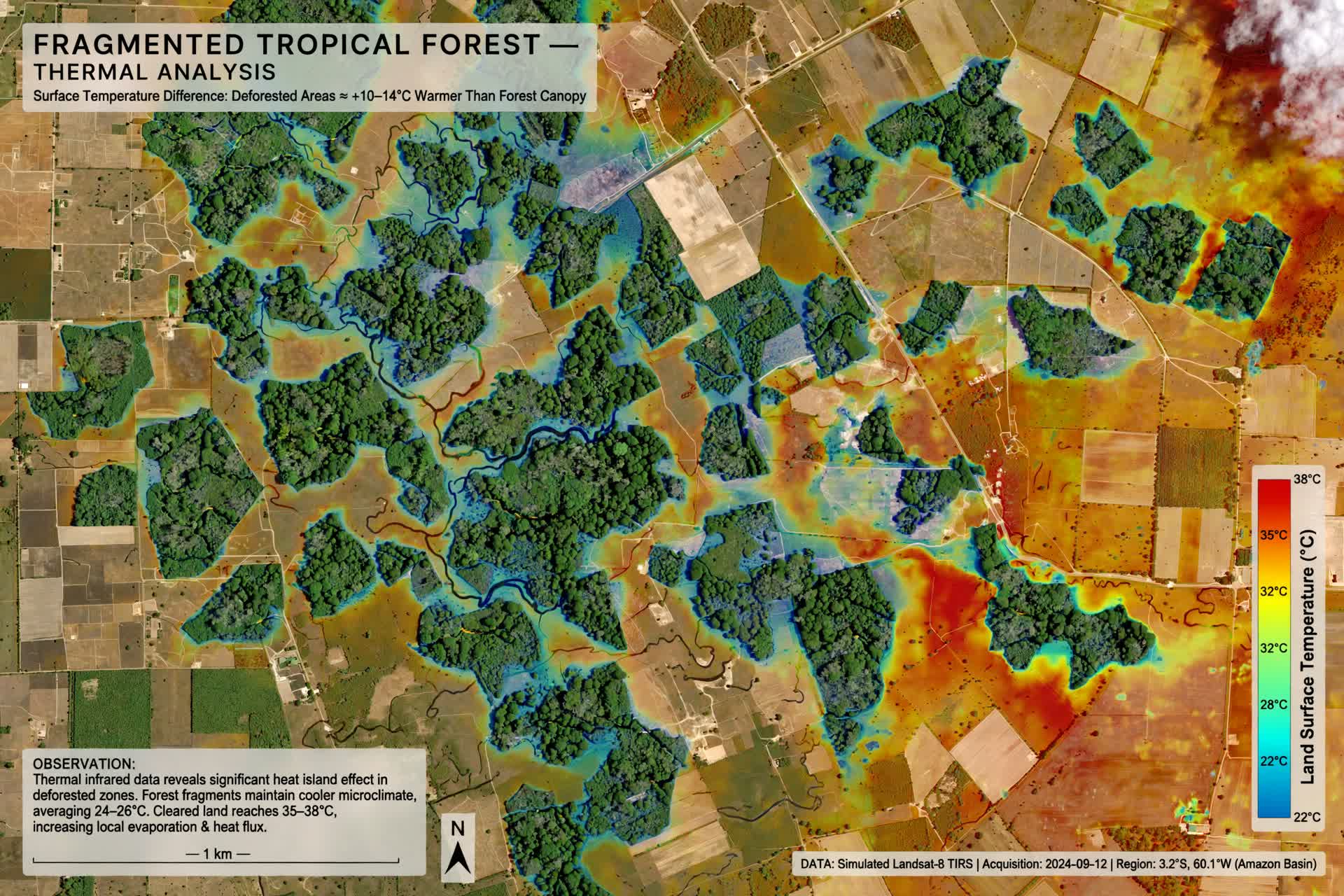
Forest fragmentation changes local temperature, not only carbon totals. A satellite analysis reported 4 October found that, in tropical and temperate zones, breaking continuous forest into isolated patches raised surface temperature by an amount comparable to the effect of losing forest area. In high-latitude boreal forest the same breakup cooled the surface, because open ground exposed more reflective snow. Climate accounting that tracks only hectares will mis-state the energy budget. Biology: a Journal of Phycology paper from Julia Van Etten and colleagues adds two photosynthetic Paulinella species, bringing the known total to six. Paulinella is one of the few independent cases of a microbe that acquired photosynthesis by engulfing a cyanobacterium. Human neuroscience: the five depression connectivity profiles above are brain-state clusters, not a new origin story and not a clinical test.
7. THE PAPER OF THE DAY
Kate Su and colleagues, The Astrophysical Journal, released with ESA/Webb on 1 October 2026. DOI: 10.3847/1538-4357/ae88fe. Question: what are extreme debris discs, and what collisions make them? Method: mid-infrared spectra from Webb and Spitzer on 21 systems, then mineral sorting. Result: three shared traits — small grains, warm dust, irregular brightness — and a silica split. About one third silica-rich, only under 300 million years, read as Mars-scale vaporizing impacts. Two thirds silica-poor, broader ages, more variability, read as smaller or grazing impacts. Evidence: spectra and sample statistics, not resolved images of the colliding bodies. Limitations: the older silica-poor age bin rests on three discs. The authors say more systems are needed. The Late Heavy Bombardment link is consistency, not a proof. Why it matters: it turns an unseen phase of rocky-planet growth into a compositional measurement.
8. WHY THIS MATTERS TO YOU
Three threads touch ordinary systems. SMILE is aimed at the solar-wind boundary that drives auroras and can disturb satellites and grids. Roman's coronagraph is the hardware bet behind any future picture of a nearby pale dot. The depression subtypes are a warning against one-scan medicine: opposite connectivity can share a diagnosis, so a single biomarker headline is premature. The Webb disc result does not change a device in your house. It changes the prior on how often Earth-like assembly includes a Moon-making impact. Forest fragmentation is the local item: patch size is a temperature variable, not only a wildlife variable.
9. REALITY CHECK
WHAT WE KNOW: Webb and Spitzer spectra exist for 21 extreme debris discs. Roman's coronagraph made a focused test image on 22 September. SMILE is in science operations and has ultraviolet auroral-ring footage plus X-ray calibration frames. Einstein Probe triggered on EP261003a. Chang'e-6 impact glass contains gamma-iron. A 263-patient MEG study found five connectivity groups. WHAT WE THINK: Silica tracks impact energy and body size. Gamma-iron may store lunar magnetic history. Depression groups may explain contradictory imaging. WHAT WE DON'T KNOW YET: Whether Roman can dig a dark hole deep enough for planets. Whether SMILE will get a clean magnetopause image in mid-October. What EP261003a is. Whether the silica-poor and Late Heavy Bombardment link survives a larger sample. Whether depression subtypes replicate or predict treatment.

CLOSING SIGNAL
If you remember one thing: rocky planets announce their violent youth as warm dust, and Webb can now read the mineral dialect of those collisions. About one percent of young stars show it. Silica-rich wreckage looks confined to the first 300 million years. The Moon-forming impact fits that window. It is evidence of a phase, not a portrait of Theia.
Listen to the stories
Story 1 — Colliding Worlds
Story 2 — Roman First Light
Story 3 — Earth's Shield
Story 4 — X-Ray Flash
Story 5 — Moon Iron
Story 6 — Brain Circuits
Story 7 — Quantum Graphene
Story 8 — Fragmented Forest
Story 9 — Moon's Birth
← Back to the News Desk